
FDM 3D Printing
FDM (fused deposition modelling) extrudes heated thermoplastic through a nozzle layer by layer.

Part of 3D Printing
PolyJet 3D printing deposits and UV cures liquid photopolymer droplets layer by layer for smooth, detailed parts.
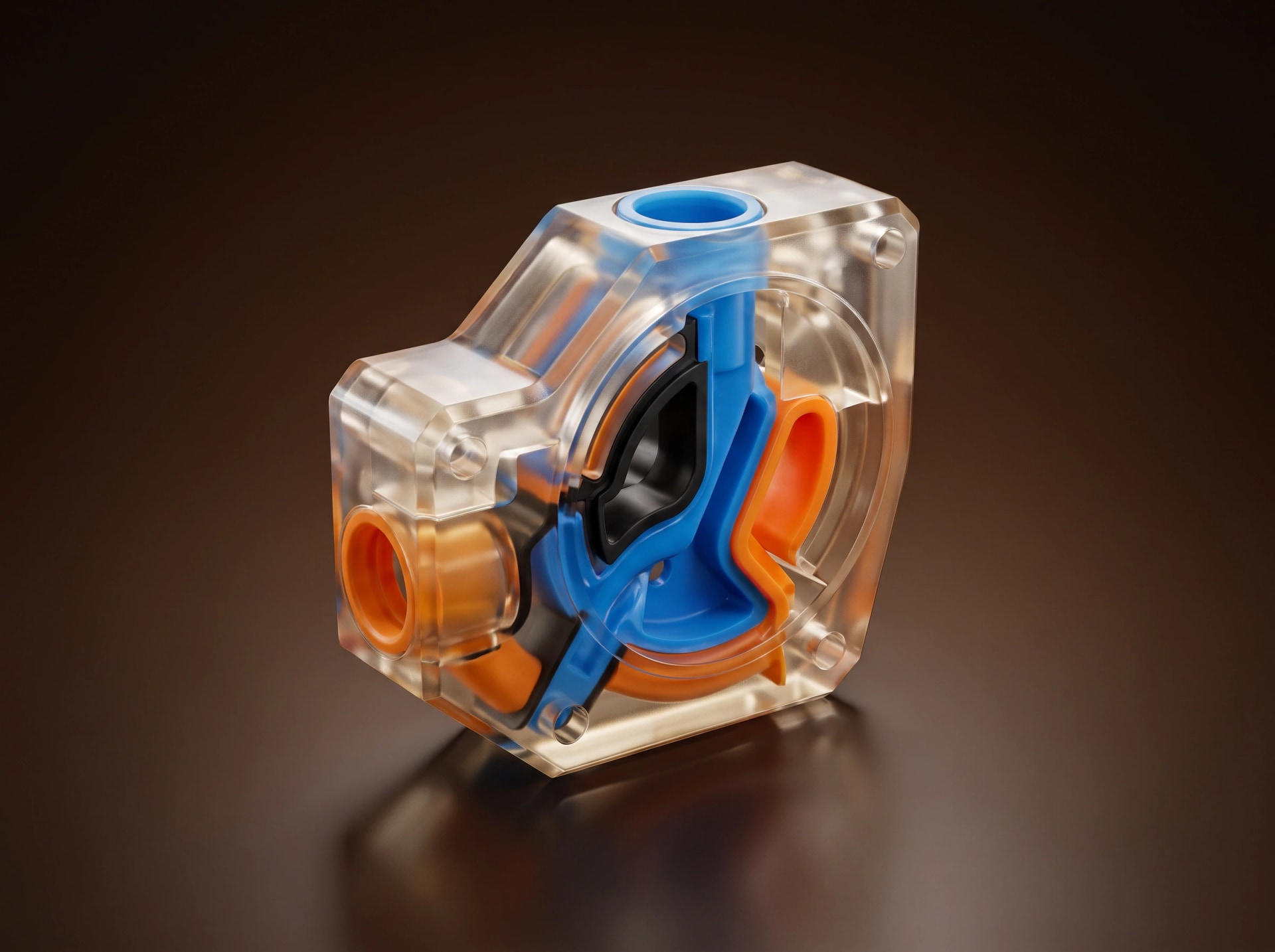
PolyJet is a high-precision additive manufacturing process that produces smooth, detailed, and multi-material polymer components directly from 3D CAD data. Unlike filament extrusion or powder-bed fusion, an industrial PolyJet 3D printer operates on material-jetting principles: print heads jet microscopic droplets of liquid photopolymer onto a build platform and cure each ultra-thin layer immediately with ultraviolet (UV) light.
Among modern polymer 3D printing technologies, PolyJet stands out for its ability to deposit multiple resins and colours simultaneously within a single monolithic build. Rigid engineering-grade photopolymers, flexible rubber-like elastomers (ranging from Shore 30A to 95A), and optically transparent resins can be combined in one part—accurately replicating overmoulded assemblies, soft-touch grips, living hinges, and complex visual prototypes without manual bonding or assembly.
With layer thicknesses as fine as 16 to 28 microns, parts leave the build tray with crisp feature definition and an injection-mould-like surface quality in either a glossy or uniform matte finish. A gel-like, water-soluble support material surrounds overhangs and internal cavities during printing and is cleanly removed with a pressurized water jet, preserving delicate geometries and fine textures without mechanical support marks.
Through Snijer's PolyJet 3D printing service, engineering and product development teams can accelerate design verification, ergonomic testing, and low-volume functional prototyping. As an integral part of our plastic 3D printing service and online 3D printing service, every submitted CAD file is reviewed for wall thickness, material zoning, and dimensional accuracy—complementing our broader 3D printing and precision CNC machining capabilities to deliver reliable parts on short lead times.
 Ultra-fine layer resolution of 16 to 28 microns for smooth, injection-mould-like surfaces.Simultaneous multi-material and full-colour printing in a single monolithic build.Variable Shore hardness blending from soft rubber-like elastomers (30A) to rigid polymers (95A).Optically clear, opaque, and high-detail photopolymer resins with glossy or matte finishes.Water-soluble gel support structures enabling complex undercuts and delicate internal features.Dimensional tolerances typically within ±0.1 mm (or ±0.2% on larger geometries).
Yes. PolyJet jets multiple photopolymer resins simultaneously, allowing rigid plastics, flexible rubber-like elastomers (Shore 30A to 95A), and transparent sections to be printed together in a single build without adhesives or secondary assembly.
With layer thicknesses as fine as 16 to 28 microns, PolyJet produces noticeably smoother surfaces than FDM or SLS right out of the printer. Depending on part orientation and design requirements, parts can be produced with either a smooth glossy finish or a uniform matte texture.
PolyJet photopolymers are thermoset resins optimized for fine detail, surface quality, multi-material realism, and visual or ergonomic validation rather than high heat or heavy mechanical loads. Most standard PolyJet resins have a heat deflection temperature around 45–50 °C; for higher thermal or structural demands, we recommend SLS, MJF, or CNC machining.
FDM (fused deposition modelling) extrudes heated thermoplastic through a nozzle layer by layer.
SLA (stereolithography) cures liquid photopolymer resin with a UV laser, layer by layer.
DLP (digital light processing) cures an entire resin layer at once with a projector.
SLS (selective laser sintering) fuses nylon powder with a laser.